
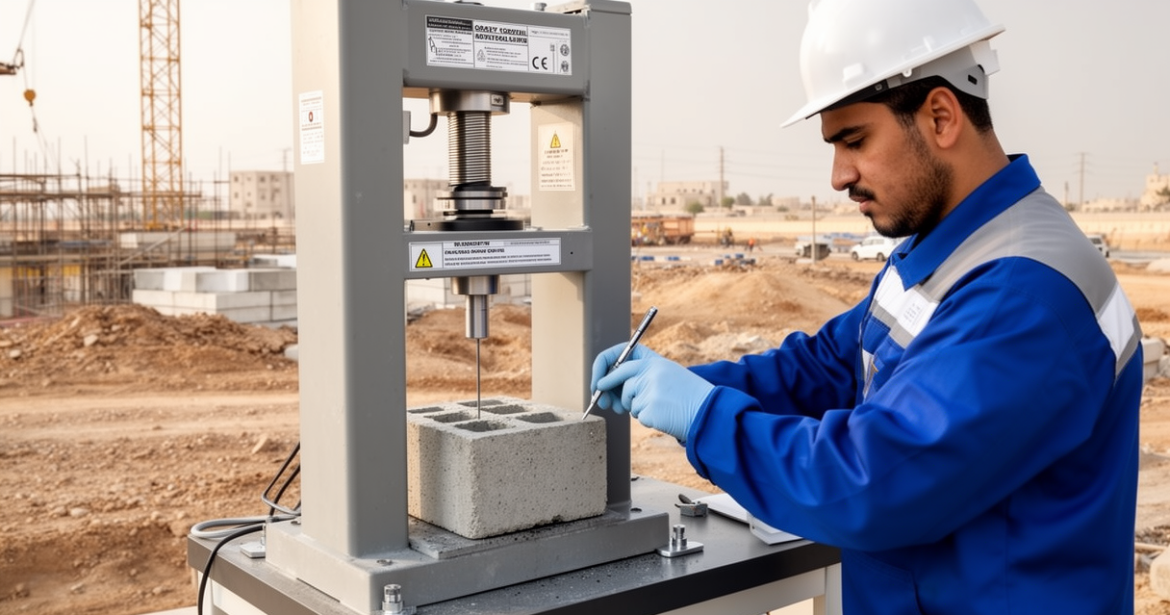
Why Concrete Quality Control Is the Backbone of Civil Engineering
Concrete is one of the most widely used construction materials in Egypt, yet poor concrete quality remains a major cause of premature structural deterioration. A rigorous Quality Control (QC) program is not optional — it is a fundamental engineering obligation.
-
Key Concrete Properties That Must Be Controlled
Effective quality control focuses heavily on compressive strength, workability, durability, and consistency. Each batch delivered to the site must meet the required specifications to ensure long-term performance and serviceability.
-
Standard Concrete Tests Used in Egypt
Common tests mandated by the Egyptian Code (ECP 203) include slump testing, cube compressive strength testing at 7 and 28 days, permeability checks for water-retaining structures, and chloride ion content testing for coastal projects.
-
Concrete Mix Design for Egypt’s Climate
Egypt’s hot climate demands careful attention to mix design, delivery temperature, retarding admixtures, and placement timing. These measures reduce rapid moisture loss, limit thermal cracking risks, and ensure workability.
-
Site Curing: The Most Neglected Quality Step
Proper curing is often neglected on site, yet it directly affects strength gain, surface quality, and durability. Concrete should be kept continuously moist for the required curing period using wet burlap, curing compounds, or ponding.
Core Line Construction’s Quality Commitment