
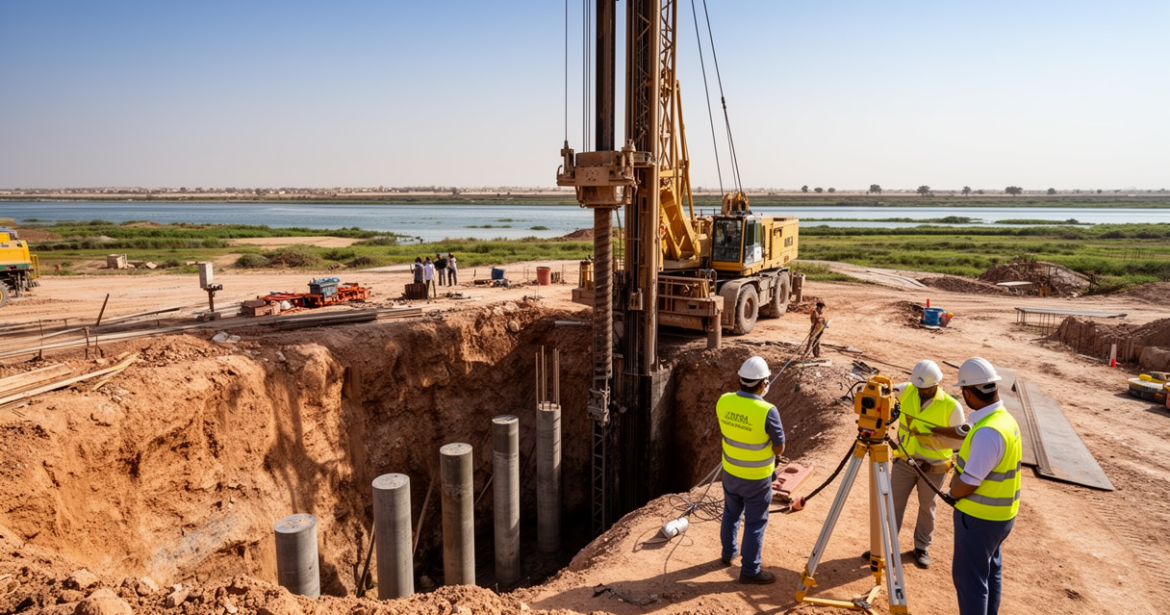
Why Foundation Design Is Critical in Egypt
Egypt’s geography presents incredibly varied and challenging soil profiles, from the soft alluvial deposits of the Nile Delta and expansive clay to loose sandy desert soils and coastal sabkha. Each environment demands a highly tailored foundation solution to prevent structural failure.
-
Geotechnical Investigation: The Non-Negotiable First Step
Every foundation design should begin with a thorough geotechnical investigation including boreholes, penetration testing, laboratory analysis, and groundwater assessment. Skipping or under-specifying this phase is a leading cause of foundation problems.
-
Types of Foundations Used in Egypt
Shallow foundations such as isolated footings and rafts are suitable where bearing capacity is adequate. Deep foundations such as bored or driven piles are required where loads are exceptionally high or poor soils extend to significant depth.
-
Dealing With High Groundwater Tables
In many Egyptian locations, high groundwater adds massive complexity to foundation construction. Essential solutions include construction dewatering, waterproof concrete mixes, crystalline admixtures, and robust permanent waterproofing systems.
-
Compliance With Egyptian Codes
Foundation design in Egypt must comply strictly with the relevant Egyptian codes for soil mechanics, foundation engineering, and loads (ECP 201 & ECP 202). These codes define investigation requirements, safety factors, and settlement limits.
Core Line Construction’s Civil Engineering Expertise