
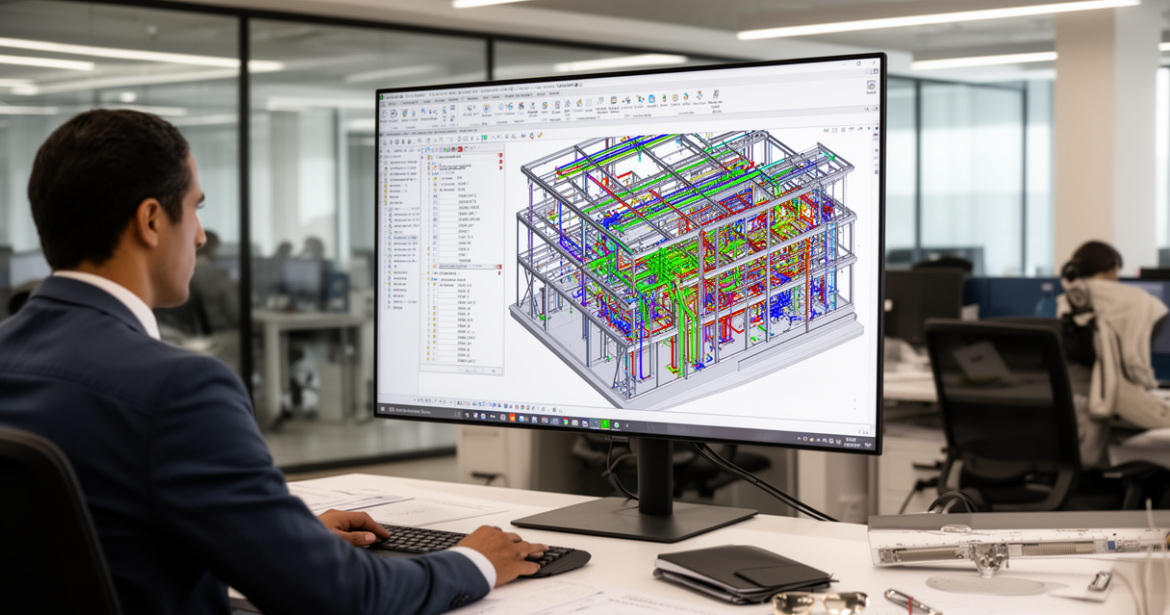
What Is BIM and How Does It Transform MEP Projects?
Building Information Modeling (BIM) is a digital process that creates intelligent 3D models of a building’s architecture, structure, and MEP systems. Unlike traditional 2D drawings, BIM allows all project disciplines to work within a shared data environment, resolving conflicts before a single pipe is installed.
-
MEP Clash Detection: Saving Time and Money
In complex buildings, HVAC ducts, electrical trays, plumbing pipes, and structural beams often compete for the same space. Without BIM coordination, these clashes are only discovered during construction, causing costly rework and delays.
-
Key BIM Deliverables for MEP Projects
A complete BIM MEP workflow typically produces a fully coordinated 3D model, clash detection reports, coordinated shop drawings, accurate material quantity takeoffs, and an as-built model for long-term facility management.
-
BIM Levels and LOD in MEP Design
BIM is implemented at different Levels of Development (LOD) ranging from conceptual to as-built. For MEP coordination, detailed geometry and connection data (LOD 300-400) are critical to successful coordination and installation planning.
-
BIM Adoption in Egypt’s Construction Sector
BIM adoption in Egypt is accelerating rapidly, particularly in large-scale government and private developments in the New Capital. Contractors who master BIM are securing a strong competitive advantage as clients increasingly mandate it.
Core Line Construction and BIM