
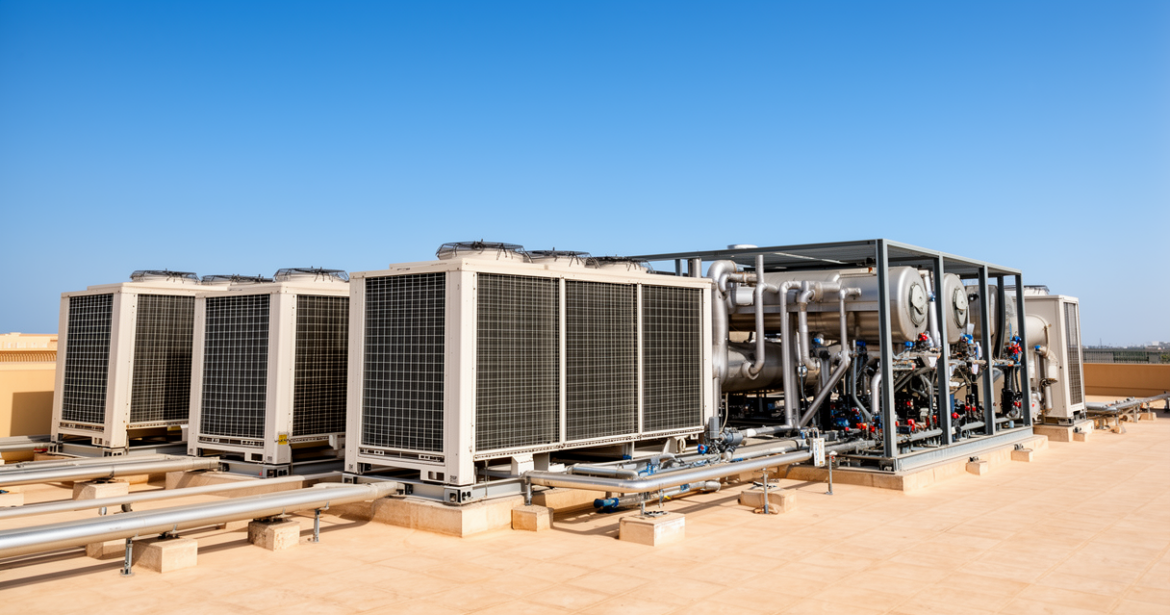
The Two Dominant HVAC Technologies for Large Buildings
When it comes to air conditioning large commercial or mixed-use buildings in Egypt, two technologies dominate the conversation: VRF (Variable Refrigerant Flow) and Chilled Water Systems. Both are capable of delivering excellent comfort and efficiency, but they suit very different project profiles.
-
How VRF Systems Work
VRF systems use refrigerant as the heat transfer medium, circulating it directly between one or more outdoor units and multiple indoor fan coil units. The system modulates refrigerant flow to each zone independently, allowing strong zoning control and excellent part-load efficiency.
-
How Chilled Water Systems Work
Chilled water systems use electrically driven chillers to cool water, which is then pumped through air handling units and fan coil units across the building. They are the system of choice for large-scale developments where scale justifies the higher capital investment.
-
Head-to-Head Comparison
For buildings up to 10,000 m² with diverse zoning needs, VRF is typically the more practical choice due to lower installation complexity. For larger developments or projects targeting advanced energy performance (like LEED), a chilled water plant will usually deliver better lifecycle economics despite higher capital costs.
-
Which Should You Choose?
The decision ultimately relies on your specific building footprint, budget, and long-term energy goals. In many large Egyptian projects, a hybrid approach — chilled water for main zones and VRF for peripheral areas — offers the best of both worlds.
Get Expert HVAC Advice From Core Line Construction